
The short answer
Meta's Spam policy prohibits buying followers, so in Canada the main risk falls on your account, not on a fine. Disclosure rules still apply to every sponsored post, and a bought count never replaces a label. Use followers as a starting count for a new page, and never to mislead customers or brands.
Key facts
- Meta's Spam policy lists selling, buying or exchanging engagement, including follows, as prohibited (checked October 16, 2026).
- Ad Standards' 2025 Influencer Marketing Disclosure Guidelines ask for any material connection to be disclosed clearly, prominently and close to the claim.
- The Competition Bureau says the Competition Act's deceptive marketing rules apply to influencers and to the advertisers who engage them.
- In the 2021 Census, 18.0% of Canadians could hold a conversation in both English and French, and 46.4% of people in Quebec could.
- DataReportal put Instagram's advertising audience in Canada at 21.0 million in late 2025, about 52.2% of the population.
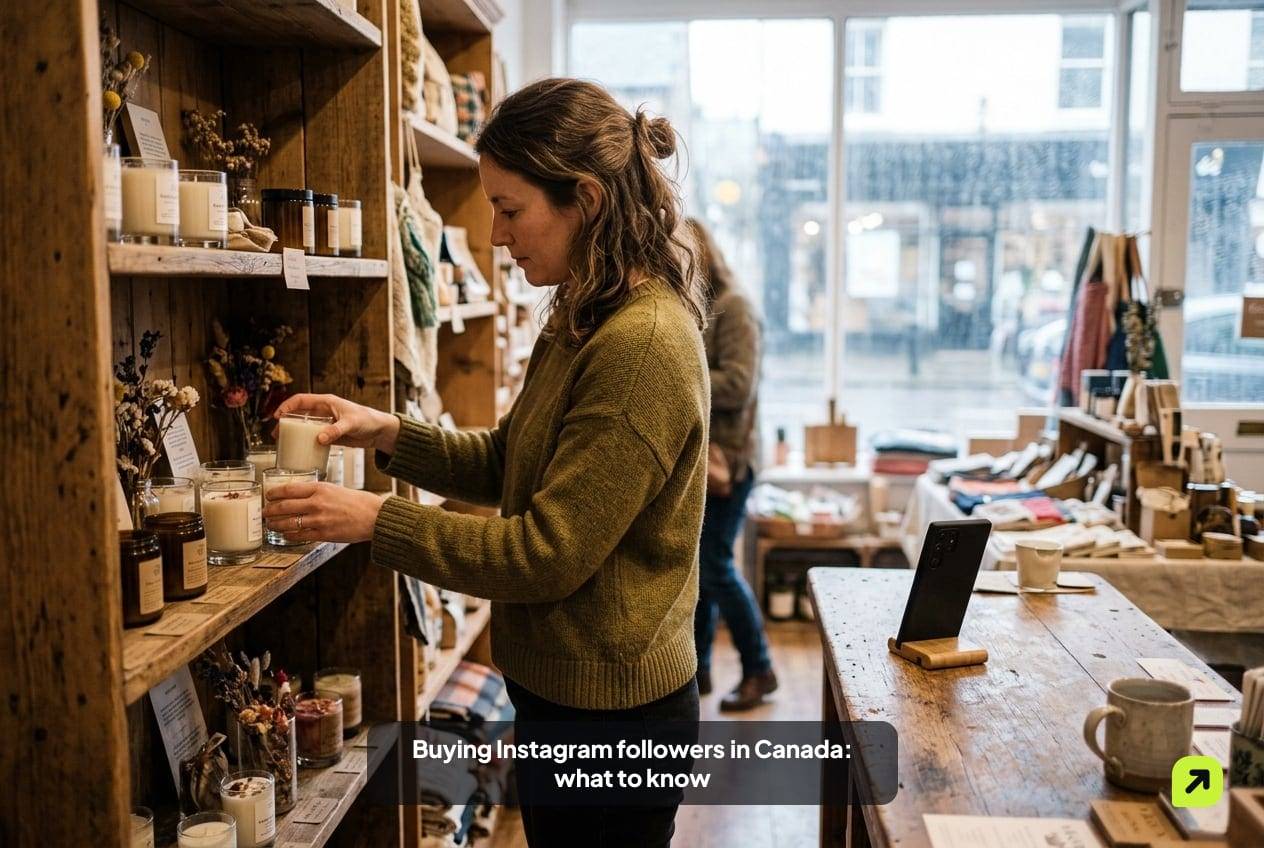
A new Instagram page in Canada faces two small problems at once. Visitors judge the profile in a second, and the page may have to speak to English and French readers at the same time. A starting follower count only touches the first problem, and only a little.
This guide covers what Canadian rules say about disclosure, why a bilingual audience changes how you set up the page, and where a starting count makes sense for a small business. If you already know what you want, you can buy Instagram followers on the service page, or see the Canada page for payment details.
Is buying Instagram followers allowed in Canada?
We found no Canadian regulator addressing it directly, but Instagram itself says no. Meta’s Spam policy lists “selling, buying, or exchanging for engagement, such as likes, shares, views, follows, clicks” among prohibited behavior. The policy applies to Instagram everywhere, so being in Canada changes nothing.
That means the realistic risk is to your account. Instagram may remove the engagement, limit the account, or in a bad case take it down. Our guide to the risks of buying Instagram followers goes through what that looks like in practice, and why followers drop explains the slow loss that often follows.
Canadian law matters in a different place: what you say with the count. The Competition Bureau says the Competition Act’s misleading advertising and deceptive marketing provisions apply to influencers and to the advertisers who engage them. A follower number is not an advertisement on its own. It becomes a problem when you use it to claim a reach or popularity you do not have, in a pitch to a brand or in marketing to customers.
| Question | Who sets the rule | What it means for you |
|---|---|---|
| Can I buy followers? | Meta, Spam policy | Prohibited by the platform; the risk is to your account |
| Must I label a paid post? | Ad Standards guidelines and the Competition Act | Yes, clearly and close to the claim |
| Can I overstate my reach to a sponsor? | Competition Act, deceptive marketing | No; claims must be accurate |
| Does the account need to be public? | Our order check | Yes, the profile must be public during the order |
What do Ad Standards and the Competition Bureau require?
Disclosure of the brand relationship, every time. Ad Standards, the self-regulatory body for Canadian advertising, publishes Influencer Marketing Disclosure Guidelines, and its page says the 2025 edition requires that any material connection between the influencer and the brand be disclosed. The disclosure must be “clear, prominent, and in close proximity to the representation being made.”
The Competition Bureau’s Deceptive Marketing Practices Digest adds the legal side. It says the opinions and reviews of influencers “must be genuine and based on actual experience”, and that advertisers can be liable for what is said through influencers. It also notes that non-compliance can bring significant monetary penalties.
What neither page does is exempt you because of a follower count. A creator with 800 followers and one with 80,000 follow the same rule. Also keep in mind that the Ad Standards guidelines are self-regulatory, while the Competition Act is the law, so a post can meet one and miss the other.
For a side-by-side with other countries, read our influencer disclosure rules by country. Practical habits that keep you inside the guidance:
- Put the disclosure on the post itself, near the claim, not buried in a long caption.
- Use plain words a visitor understands, in the language of the post.
- Disclose gifted products as well as paid ones.
- Never ask friends or staff to post glowing reviews without saying who they are.
- Keep screenshots of your real analytics for sponsors, and do not edit them.
How do bilingual audiences change the plan?
They change the profile before they change the order. In the 2021 Census, Statistics Canada reported that 63.8% of Canadians spoke mostly English at home and 19.2% mostly French. In Quebec, 77.5% spoke mostly French at home. Bilingualism, meaning the ability to hold a conversation in both languages, was 18.0% across Canada and 46.4% in Quebec.
Those numbers say two things. Outside Quebec most of your audience reads English, but a French-speaking minority exists in every province. And inside Quebec, a page in English only leaves most of your neighbors reading a language that is not their first.

A few choices that work for a bilingual page:
- Bio: one line in each language, so a visitor from either side sees themselves in the first three seconds.
- Captions: write the first language of your main market first, then the second. Do not run a machine translation without reading it.
- Hashtags: use tags in both languages, because people search in the language they think in.
- Stories and Reels: speak in one language and add captions in the other, so one video serves both.
Language makes no difference to an order. Delivery does not look at your captions, and the new followers are not Quebec-based or Ontario-based because you asked. The count is the same number on either profile, so the bilingual setup is what decides whether a visitor stays. Our Montreal and Toronto pages cover creators in those two cities, and the Instagram followers page for Canada has the order details.
According to DataReportal, Instagram’s advertising audience in Canada was 21.0 million in late 2025, about 52.2% of the population. That is an advertising estimate from Meta’s own tools, not a count of unique people, but it shows how many Canadians a page can reach, and how many other pages compete for them.
Who in Canada uses a starting follower count?
Small businesses and solo creators, mostly at the launch of something. The sensible uses are narrow, and the legal framing is the same each time: the count helps a new page get a fair first look, and it does not stand in for a customer base.
A maker opening an online shop. A woodworker in Nova Scotia photographs furniture and posts it for the first time. The page has a handful of followers, all friends. A starting count means a buyer from Halifax or Calgary who finds the page sees something that looks like a working shop. The sales still come from the photos and the price, and you should never say in your listing that you have “thousands of customers”.

A bilingual creator launching a second language. A recipe creator in Ottawa has an English audience and starts posting in French. The French posts get little attention at first because the page looks like it does not belong to French readers. A modest count and a French bio close part of that gap, and the saves tell you whether the French content works.
A local service business. A cleaner, a dog walker or a physiotherapist in Winnipeg uses Instagram as a portfolio people check before booking. The profile will not win the booking, but an empty page can lose it. Here the follower count is the least important part; photos of real work and clear contact details matter more.
Not a good use: presenting the count to customers as proof of popularity, using it in a sponsorship pitch as reach, or ordering it to make a failing product look in demand. Those uses mislead the people you are talking to, which is exactly where the Competition Act applies.
What does an order cost and how do you pay from Canada?
Prices on Socipro appear in US dollars, and your card issuer converts the total to Canadian dollars. There is no CAD price list. We accept Visa, Mastercard, American Express and Apple Pay; Interac and PayPal are not offered. Because your bank sets the rate and may charge a foreign currency fee, a card without that fee can cost less.
For how the price breaks down by tier, and what other sellers charged on a dated day, read how much 1,000 Instagram followers cost. We do not repeat the numbers here, because the live price table on the service page is the one that counts.
Every order is checked before payment: we look up the public profile, and an account set to private fails that check. Orders can be tracked live, and a guest follows one with the order number and email. If part of an order is not delivered, the undelivered part goes back to your Socipro wallet, as set out in the refund policy. Premium adds a refill window on services that have one, and Quality does not, so decide which matters more to you.
How do you get more from a starting count?
By treating it as a head start on the work that earns followers. A count raises the chance that a visitor reads your posts, and the posts must do the rest. Post on a schedule your audience can predict, and check the time zone, since a 7 p.m. post in Toronto lands at 4 p.m. in Vancouver. Reply to comments in the language they were written in. Tag your city or neighborhood so nearby people can find you.
Then measure. Compare what happens to saves, shares, profile visits and link clicks in the weeks after an order. If those stay flat, the count did not help and a second order will not either. If you want the free side of the plan, our guide on how to get more Instagram followers covers it.
Sources
Sources (5)
- Spam, Meta Community Standards (Meta Transparency Center)
- Influencer Marketing (Ad Standards)
- The Deceptive Marketing Practices Digest, Volume 4 (Competition Bureau Canada)
- Census 2021: languages spoken at home (Statistics Canada, The Daily, August 17, 2022)
- Digital 2026: Canada (DataReportal, published November 5, 2025)
Frequently asked questions
Is it legal to buy Instagram followers in Canada?
Do I still need #Ad if I bought followers?
Should I quote my follower count to sponsors?
Do bilingual accounts need separate English and French profiles?
Will Canadian followers be sent to my account?
Is a small shop better off buying followers or running ads?
Can a Canadian business owner pay with Interac?
 Oliver AshfordEditor, YouTube, X and Buying GuidesOliver Ashford edits Socipro's YouTube, X and buying guides. The YouTube guides cover how views and subscribers are counted, why counts sometimes get corrected, and what the YouTube Partner Program asks for. The X guides cover followers, reposts and how the trending list works. The buying guides explain what to check before paying any growth service, Socipro included: refill terms, refund rules and what the seller needs from you.
Socipro sells the services mentioned in this article. How we write and check our guides: editorial policy.