
The short answer
YouTube's Terms of Service and fake engagement policy prohibit paying for views, likes or subscribers. Its systems filter suspect activity, spam subscribers are left out of your count, and monetized channels can lose earnings or Partner Program status. Paid engagement never counts as a route into monetization.
Key facts
- YouTube's Terms of Service bar paying people to increase a video's views, likes or a channel's subscribers.
- Under the fake engagement policy, videos can be removed and repeated violations can lead to strikes and channel termination.
- Subscribers YouTube identifies as spam, including ones bought from a third-party service, do not count toward your total.
- Partner Program applications are reviewed by automated systems and human reviewers who look at the channel as a whole.
- YouTube says it may slow down, freeze or adjust counts while it checks which views and subscriptions are legitimate.
Does YouTube allow you to buy subscribers or views?
No. YouTube’s rules are clearer on this than most platforms, and it is worth reading them before you spend anything.
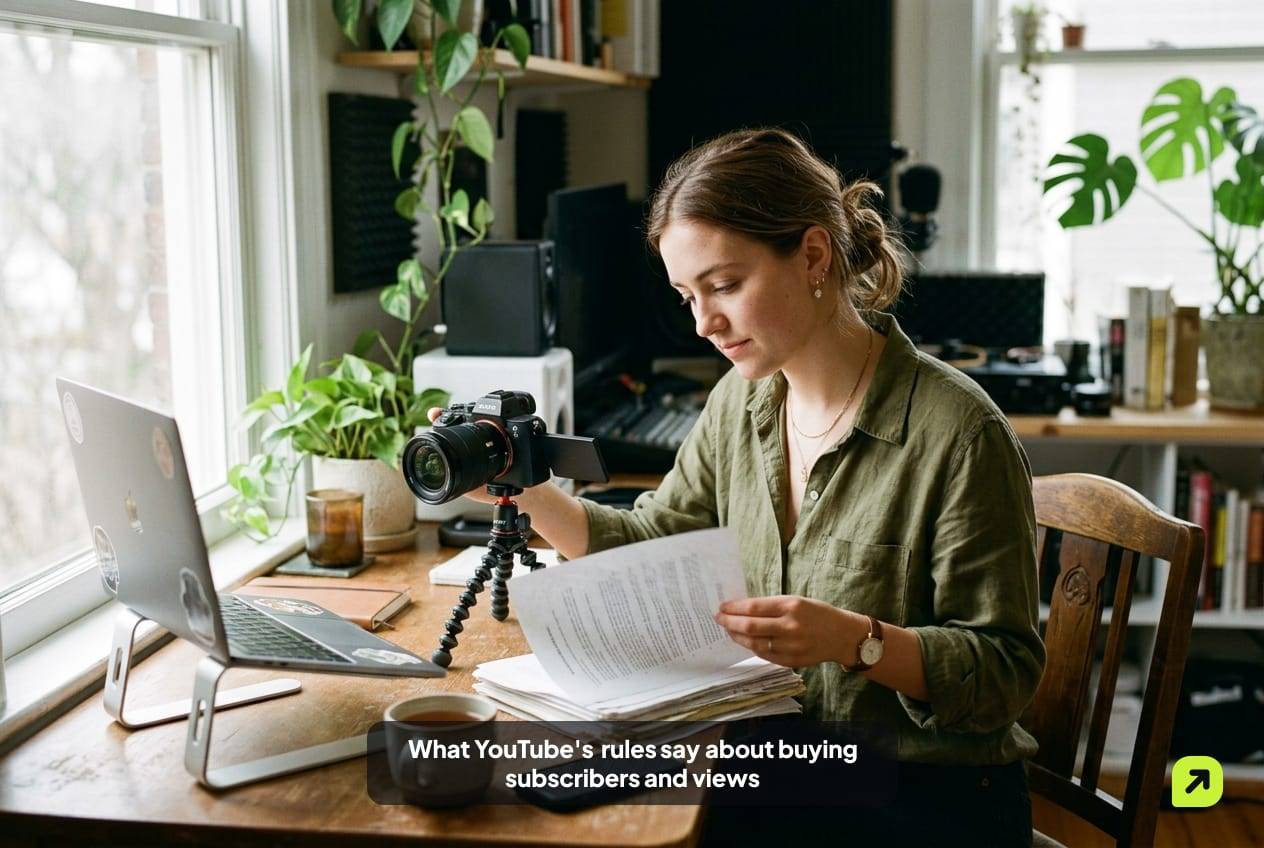
The YouTube Terms of Service list things you may not do with the service. One of them is causing or encouraging inaccurate measurements of genuine user engagement, and the example given is paying people, or giving them incentives, to increase a video’s views, likes or dislikes, or a channel’s subscribers.
The fake engagement policy repeats the point in practical terms. It covers videos that link to or promote third-party services that inflate views, likes and subscribers, and videos that show a creator buying traffic. It also covers “sub4sub” deals, where two channels agree to subscribe to each other.
We sell these services, so we have a reason to be precise here rather than vague. If you decide to buy YouTube subscribers or views, you are doing something YouTube’s terms prohibit. The rest of this guide explains what YouTube actually does about it, so you can judge the risk for your own channel.
What happens when YouTube finds artificial engagement?
The fake engagement policy describes a ladder of consequences:
- The video can be removed, and YouTube emails you.
- A first violation usually brings a warning rather than a penalty.
- After that, violations can lead to strikes. Three strikes within 90 days may mean the channel is terminated.
- Repeated violations, or a single case of severe abuse, can also end a channel.
There is one line in the policy that matters to anyone who hires outside help: if you hire someone to promote your channel, their decisions may affect your channel. YouTube does not separate “I did it” from “someone I paid did it”.
| What YouTube can do | Where it is written | Who it mostly affects |
|---|---|---|
| Remove a video and send a warning | Fake engagement policy | Any channel |
| Issue strikes, terminate after three in 90 days | Fake engagement policy | Channels with repeat violations |
| Exclude spam subscribers from the count | Subscriber count help page | Any channel |
| Freeze, slow or adjust view counts | Engagement metrics help page | Any channel |
| Withhold or adjust earnings, remove from the Partner Program | Channel monetization policies | Monetized channels |
How does YouTube spot bought subscribers and views?
YouTube does not publish its detection methods, and nobody outside the company knows them in detail. What it does publish is how counting works.
On how engagement metrics are counted, YouTube says it wants metrics to come from people, not programs, and that its systems need time to work out which views, likes and subscriptions are legitimate. While that happens it may slow down, freeze or change a count, and it discards low-quality playbacks. The same page says that since August 24, 2026, a view is counted the moment a video starts to play. Validation still applies after that.
For subscribers, the help page on checking your subscriber count is direct. It defines spam subscribers as ones gained through artificial means, “such as purchasing subscribers through a third-party service”, and says spam subscribers and closed accounts do not count toward your total.
Two practical results follow. First, some of what you pay for can be filtered out after delivery. Second, a count that drops after an order is not always a sign of a penalty; often it is just YouTube’s validation catching up. Our guide to how YouTube counts views covers the counting side in more depth.
What does this mean for the Partner Program?
This is the part where we would steer most people away from a paid order.
The Partner Program eligibility page currently lists two paths to full monetization: 1,000 subscribers with 4,000 qualified watch hours in the last 12 months, or 1,000 subscribers with 10 million qualified Shorts views in the last 90 days. The word “qualified” carries weight. Views from ad campaigns, private or unlisted videos and deleted videos are left out, and Shorts feed watch hours do not count toward the long-form total.
Applications are reviewed by automated systems and human reviewers who look at the channel as a whole, and YouTube keeps checking channels after they join. The same page says YouTube is introducing updates to the program from February 1, 2027, and that creators who want to keep monetizing must accept the updated terms in YouTube Studio by January 31, 2027. For new applicants from that date, the bar becomes 1,000 subscribers plus 8,000 qualified watch hours in 365 days or 20 million qualified Shorts views in 90 days.
The channel monetization policies close the loop. Under creator integrity, they say creators should not artificially inflate views, subscribers, likes, watch time or ad impressions. Invalid traffic and fake engagement are listed as reasons YouTube may withhold or adjust earnings, and the behavior can lead to removal from the program or termination.
Put together: bought subscribers are likely to be excluded from the number YouTube uses, reviewers look at more than the number, and a monetized channel has earnings at stake. If your goal is the Partner Program, read our guide on getting your first 1,000 subscribers and do it with uploads, not orders.
So when does a paid order make sense?
There are narrower cases where creators still choose to order, knowing the rules:
- A new channel’s first impression. A channel with a handful of subscribers and a strong first video can look abandoned to a stranger. A small order changes how the page reads at a glance. It does not change whether the video holds attention.
- A launch or premiere. Artists and small studios sometimes want a new release to open with a few views on the counter rather than none.
- Testing a format. Some creators put a modest number of views behind two versions of an idea to see which one real viewers stay with longer. The bought views are noise in that test; the retention graph in YouTube Studio is the signal.
None of these is about misleading an advertiser, a sponsor or a customer about your reach. If a brand is paying you based on your numbers, the honest move is to show them your analytics, which separate traffic sources.
How do you keep the risk low if you still order?
These habits come from what YouTube publishes and from handling support tickets on the delivery side:
- Keep it small relative to the channel. A jump that dwarfs your normal daily growth is exactly what validation systems look at.
- Never use it near a Partner Program application or on a monetized channel. The downside there is your earnings, not a number on a page.
- Never hand over account access. A provider needs your public channel or video link and nothing else. Our list of provider red flags covers the warning signs.
- Expect some drop. Validation can remove part of an order. On services where a drop is measurable, Premium includes a refill window, explained in what a refill covers.
- Keep uploading. Paid numbers fade into the background as the channel grows. On a channel that stops uploading they are most of what is there.
What does Socipro do differently on YouTube orders?
We cannot change YouTube’s rules or its validation, and we will not claim otherwise. What we control is the order itself.
Before you pay, our link check looks up the public channel or video you entered and shows it back to you, so the order cannot go to the wrong place. We only ever ask for a public link. Delivery runs gradually rather than in a single burst, you can follow it live from your order page, and if we cannot complete an order the undelivered part is refunded to your Socipro wallet. Premium adds a refill window on YouTube subscribers, views and Shorts views; the service page shows its length.
The rest of our buying guides apply the same approach to Instagram, TikTok and X.
Sources
Frequently asked questions
Can buying subscribers get my YouTube channel terminated?
Do bought subscribers count toward the Partner Program?
Will YouTube remove views I paid for?
Is promoting my video with Google Ads the same thing?
 Oliver AshfordEditor, YouTube, X and Buying GuidesOliver Ashford edits Socipro's YouTube, X and buying guides. The YouTube guides cover how views and subscribers are counted, why counts sometimes get corrected, and what the YouTube Partner Program asks for. The X guides cover followers, reposts and how the trending list works. The buying guides explain what to check before paying any growth service, Socipro included: refill terms, refund rules and what the seller needs from you.
Socipro sells the services mentioned in this article. How we write and check our guides: editorial policy.